

Location
Treatment and Reporting of Missing Data
This workshop will introduce the problems caused by missing data and explain why thoughtful handling and careful reporting is crucial. It is designed for researchers and students who want a clear, practical introduction to missing data methods. By the end of the workshop, you will have the tools and confidence to apply robust missing data adjustments in your own studies and to communicate those methods to meet current best-practice standards.
The workshop will cover topics such as:
- How to use missingness causal diagrams to guide analyses with missing data;
- The principles and practice of modern approaches, such as multiple imputation (MI, a flexible and frequently used missing data method), inverse probability weighting, and likelihood-based methods, with an emphasis on understanding when each is appropriate;
- The advantages and disadvantages of complete case analysis (or ‘complete records analysis’) vs. MI;
- An introduction to the midoc package and how to use its tools to plan and conduct analyses with missing data.
We will cover these topics via a range of activities, using an exemplar (simulated) dataset for illustration. You will need to bring a laptop in order to apply web-based midoc software tools. If you wish to use the programming-based version of the midoc package during the workshop, you will need version 4.3.1 of R (or later) installed on your laptop.
This event has been organised in association with the Leeds Institute for Data Analytics (LIDA), the home of data science at the University of Leeds.
Contributors
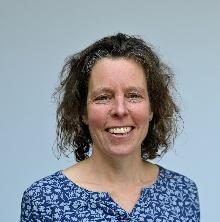
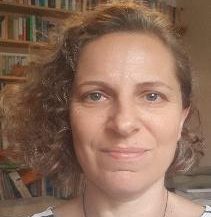
Dr Rosie Cornish is a Senior Research Fellow in Medical Statistics and Epidemiology at the University of Bristol. She carries out both applied and methodological projects, with a particular focus on handling missing data and the use of administrative and routine health data in research. In recent years, she has been involved in various projects relating to youth violence, looking at a range of risk factors including childhood adversity, and school absence and exclusion.
Dr Ellie Curnow is a Research Fellow and Lecturer in Medical Statistics at the University of Bristol. Her main research interests are in the development of statistical methods and their application to health, clinical, and social research, with a particular interest in missing data and survival analysis methods.
Professor Jose Pina-Sánchez is Director of Advanced Quantitative Methods (AQM) for the WRDTP and Professor in Quantitative Criminology at the University of Leeds.

Please note: The WRDTP is committed to sustainability and to reducing the waste from excess catering at events. A key challenge here is non-attendance at events. From October 1st 2025, the WRDTP will be changing the way we manage the non-attendance of PGR students who have booked place/s at WRDTP Training events. Any PGR student who does not inform the WRDTP (via training@wrdtp.ac.uk) that they will not be able to attend a WRDTP event at least 3 working days before the event takes place will have the cost of their place deducted from their RTSG (if a WRDTP-funded student), or have this charged to their department (if not funded by the WRDTP). This will allow us to better plan for events and to avoid catering waste. Thank you in advance for your cooperation on this matter.
This is an in-person event at the University of Leeds.
This event is open to members of WRDTP partner institutions only.
Bookings will close at 9:00am on Wednesday 25th March.
When booking your place, we ask that you use your institutional (.ac.uk) email address and complete all fields of the booking form. Thank you for your understanding.