
Location
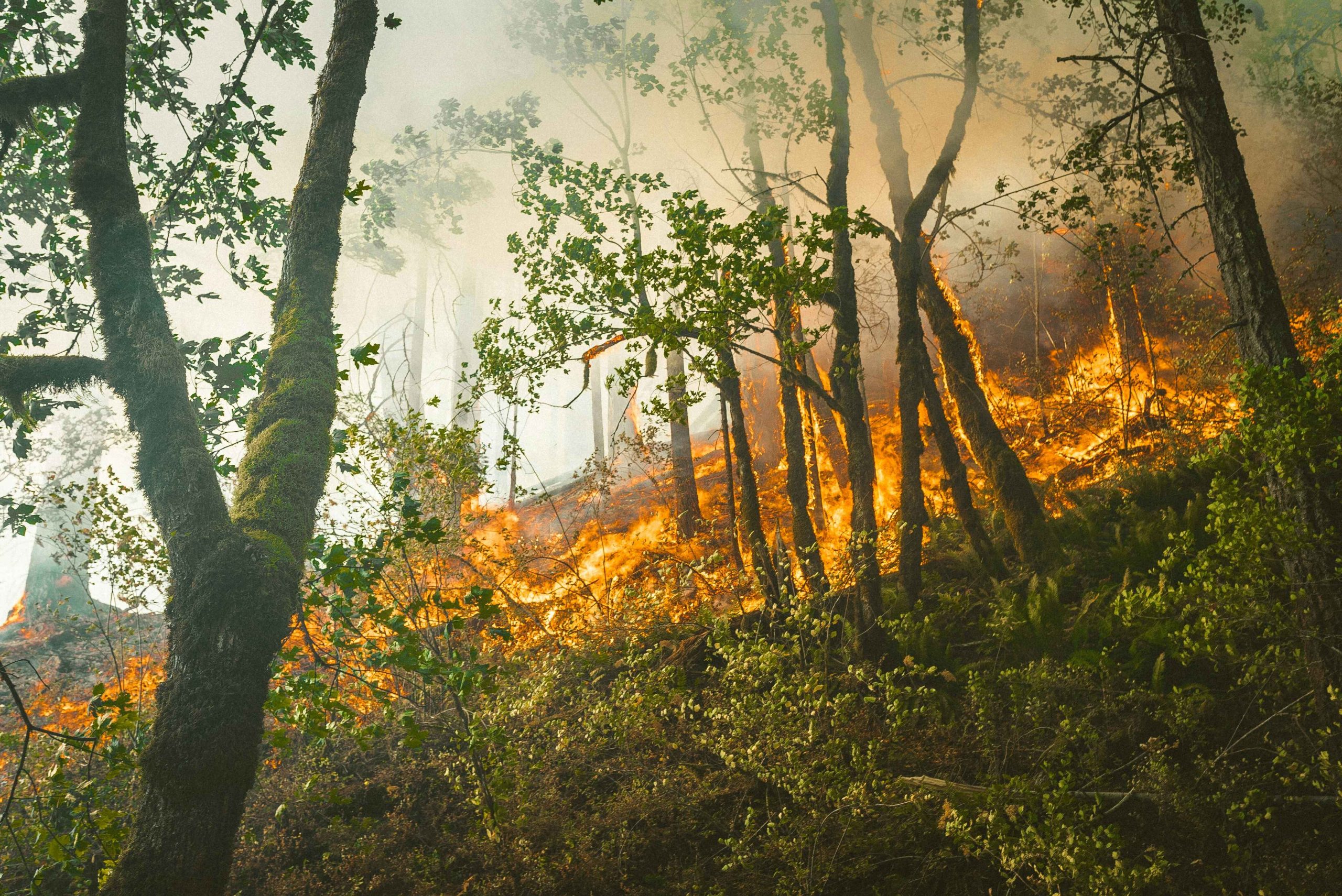
Wildfires as Political Weapons
Under what conditions do wildfires become politicised and weaponised? What socio-ecological characteristics of wildfires make them particularly amenable to political manipulation? How are blame and responsibility for fire events assigned and contested, and what do these processes reveal about broader struggles over land, identity, and power?
This paper, presented by Professor Lorenza Fontana, examines how wildfires can be transformed into political weapons, focusing on the case of Bolivia’s Chiquitania region. While fire has long been treated within ecological and disaster-management frameworks, its socio-political dimensions remain underexplored. Drawing on media content analysis and 63 semi-structured interviews, the paper shows how wildfire crises intersect with land conflicts, migration, and electoral politics to produce polarised narratives of responsibility and blame, which ultimately affect mostly communities of rural poor.
The paper argues that certain physiological characteristics of wildfires make them especially susceptible to politicisation, in particular their mobility, unpredictability, and tendency to recur cyclically. These features blur the boundary between natural and political phenomena, enabling actors to selectively assign responsibility and mobilise fire events for electoral, territorial, and ideological purposes.
Outcomes
Attendees will:
- Analyse the conditions under which wildfires become politicised and used as political tools;
- Explain the socio-ecological characteristics that make wildfires susceptible to political manipulation;
- Critically examine how responsibility and blame for wildfires are constructed and contested.
Contributors
- Lorenza B. Fontana is a Full Professor of Political Science at the University Department of Urban and Regional Studies and Planning, University and Politecnico of Turin, Italy. She holds a Chair in Politics and Society at the Collegio Carlo Alberto in Turin and is Visiting Professor in the Politics Department at the University of Glasgow (UK). Her research interests include conflict studies and contentious politics, human rights and development politics. Her latest book, Recognition Politics: Indigenous Rights and Ethnic Conflict in the Andes (Cambridge University Press, 2023), discusses the implications of ethic rights on land and resource governance. She currently leads the ERC project FIREPOL – The Politics of Wildfires, which investigates the intricate nexus between politics and wildfires across the Global South.
- Dr Roxana Barbulescu is Associate Professor in the School of Sociology and Social Policy at the University of Leeds, and director of the CDD (Civil Society, Development and Democracy) Pathway for the WRDTP.

Please note: The WRDTP is committed to sustainability and waste reduction. If you have booked a place but are no longer able to attend an event, please let us know at least 3 working days in advance by emailing training@wrdtp.ac.uk or cancelling your place on Eventbrite. Failure to do so may result in the cost of your place being deducted from your RTSG (if you are funded by the WRDTP), or a charge being made to your department (if you are not funded by the WRDTP). Thank you in advance for your cooperation.
This event will take place online.
This event is open to members of WRDTP partner institutions and other ESRC DTPs.
Bookings will close at 9:00am on Friday 13th November.
When booking your place, we ask that you use your institutional (.ac.uk) email address and complete all fields of the booking form. Thank you for your understanding.